
Beyond Software: The Rise of Open Source Hardware
Blog by Nihal Noushad K
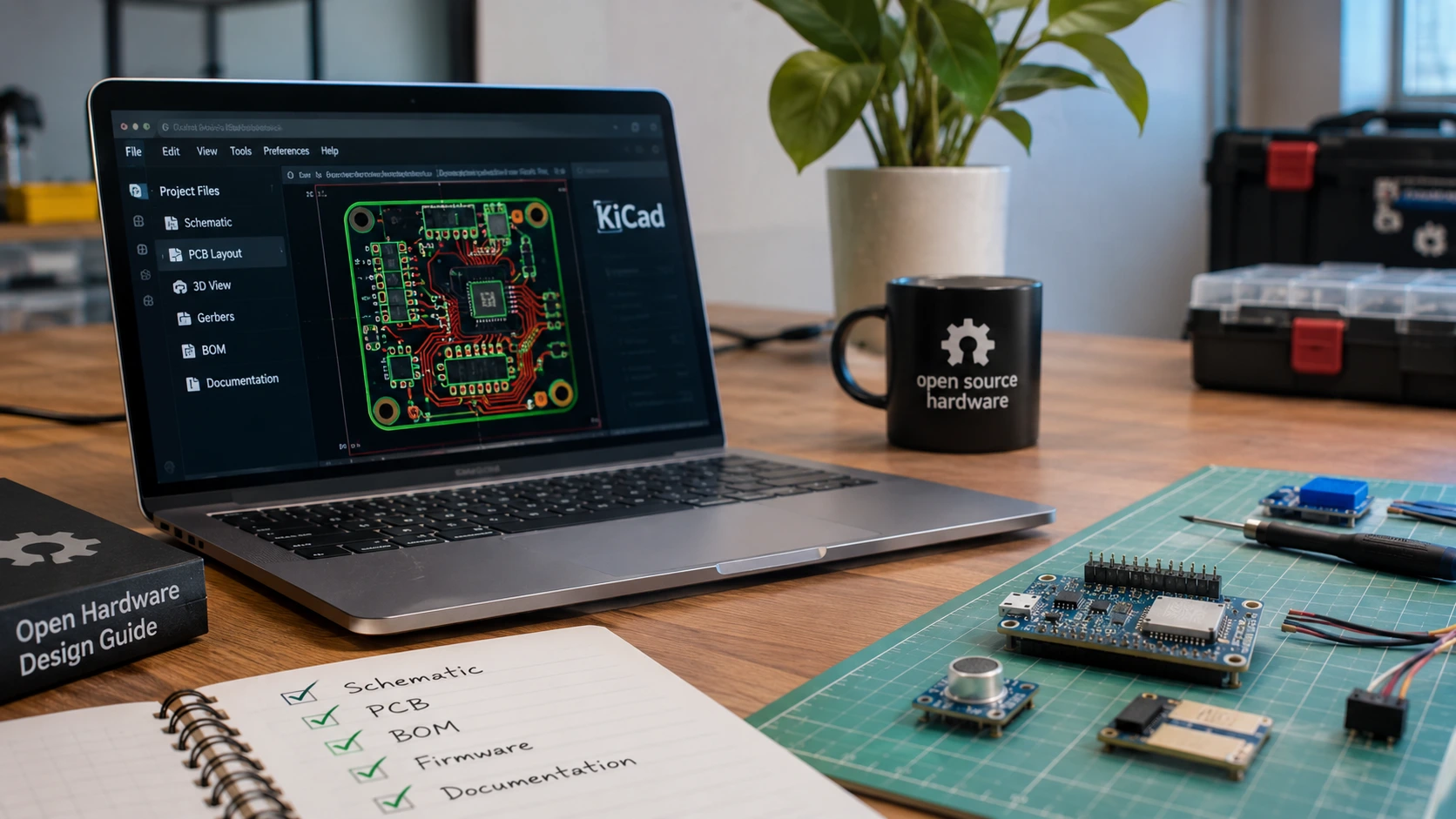
For decades, innovation in technology has largely been associated with proprietary products. Companies designed their own hardware, protected their circuit designs, controlled manufacturing processes, and restricted access to the underlying technology. Users could purchase and operate these products, but understanding, modifying, or reproducing their internal designs was often difficult.
The open-source software movement challenged this model by demonstrating that technology could evolve through shared knowledge, collaborative development, and community contributions. Projects such as Linux showed that developers across the world could collectively build and maintain complex software without relying on a single organisation.
Today, a similar philosophy is gaining momentum in the physical world.
From microcontroller development boards and robotics platforms to wearable devices and scientific instruments, open-source hardware is changing how electronic products are designed, developed, and shared.
Instead of keeping every design detail behind closed doors, developers can publish circuit schematics, PCB layouts, firmware, mechanical designs, and technical documentation, allowing others to study, modify, reproduce, and improve their work.
This raises an interesting question: What happens when the principles of open-source software extend beyond lines of code and into the physical devices we use every day?
What Exactly Is Open Source Hardware?
Open-source hardware refers to physical products whose design information is made publicly available under licences that allow others to study, modify, manufacture, distribute, and use those designs.
The idea is similar to open-source software, but there is an important difference: hardware exists in the physical world.
Sharing the source code of a software application allows another developer to modify and compile it. Reproducing a hardware product requires considerably more information, including the electronic design, component specifications, physical dimensions, manufacturing files, and assembly instructions.
A genuinely open hardware project may provide access to:
- Circuit schematics: The electrical connections and relationships between components.
- PCB design files: The board layout, copper traces, component footprints, and routing information.
- Bill of Materials (BOM): A list of components required to assemble the hardware.
- Firmware and source code: The software responsible for controlling and interacting with the hardware.
- Mechanical designs: Enclosure models, dimensions, CAD files, and mounting arrangements.
- Manufacturing documentation: Files and instructions required to reproduce the physical product.
The Open Source Hardware Association (OSHWA) provides a widely recognised definition and certification framework for open-source hardware. Its principles emphasise making design files available in a preferred format for modification and reproduction.
Importantly, simply publishing photographs of a circuit board or uploading its firmware does not make a product open source hardware. The underlying design information and appropriate licensing must also be available.
From Arduino to Modern Embedded Platforms: Open Hardware in Action
The growth of open-source hardware has been closely connected to affordable development boards and accessible electronics platforms.
Several projects have helped make hardware experimentation more accessible to students, researchers, independent developers, and companies.
1. Arduino: Making Embedded Development Accessible
Arduino played a major role in introducing microcontroller-based development to a much wider audience.
Its open hardware approach, accessible development environment, and extensive community documentation made it easier for people to experiment with sensors, motors, displays, and communication modules without requiring extensive electronics knowledge.
Arduino demonstrates how publishing hardware designs alongside software and documentation can create an ecosystem where developers build upon existing work rather than starting from scratch.
2. Raspberry Pi: Computing at an Accessible Scale
The Raspberry Pi ecosystem has made affordable computing accessible to millions of developers, educators, and makers.
It is worth distinguishing between an open development ecosystem and fully open hardware: Raspberry Pi products are not universally open hardware, and their underlying designs and silicon are not all freely reproducible.
Nevertheless, the platform demonstrates how accessible computing hardware, software, and community resources can accelerate experimentation and product development.
3. ESP32: Bringing Connectivity to Embedded Systems
The ESP32 family, developed by Espressif, has become widely used in IoT applications because of its combination of processing capabilities, wireless connectivity, and affordability.
Its development ecosystem includes extensive documentation, software frameworks, and community-supported hardware projects.
However, the ESP32 silicon itself is proprietary. Many development boards built around it can have openly shared designs, illustrating an important distinction: an open hardware project can incorporate components that are not themselves open source.
4. PineTime: Exploring Open Smartwatch Development
PineTime, developed by PINE64, is an interesting example of open smartwatch development.
https://pine64.org/devices/pinetime/
It provides a platform for exploring wearable electronics, embedded firmware, Bluetooth connectivity, displays, and sensor integration.
Projects such as PineTime allow developers to investigate how wearable devices operate at a hardware and software level, making them useful for experimentation and research.
Together, these examples demonstrate that open hardware is not limited to hobby electronics. It can support education, research, prototyping, and the development of increasingly sophisticated embedded products.
How Open Hardware Changes Product Development
Traditionally, developing an electronic product involves designing circuits, selecting components, creating PCB layouts, testing prototypes, and refining the design before manufacturing. Much of this work has to be repeated whenever a new team starts a project.
Open hardware can reduce this duplication by allowing developers to build upon existing, documented designs.
Consider a company developing a wearable device with motion tracking, Bluetooth connectivity, and biometric sensors.
Instead of designing every subsystem independently, its engineering team could investigate existing open hardware projects, study their circuit designs, evaluate available sensor modules, and adapt suitable reference designs.
This can help accelerate early-stage prototyping and reduce the time spent solving already-addressed engineering problems.
Some important advantages include:
- Faster prototyping: Existing hardware designs and reference implementations provide a starting point for experimentation. Engineers can modify established designs instead of developing every circuit from the beginning.
- Collaborative innovation: Developers from different backgrounds can contribute improvements, identify design issues, and share solutions. A project can evolve through contributions from engineers, researchers, students, and independent makers.
- Transparency and reproducibility: Access to schematics, component lists, and manufacturing files allows engineers to understand how a device works and attempt to reproduce its design. This is particularly valuable in scientific research, where reproducibility and transparent methodologies are important.
- Reduced development barriers: Open reference designs and development platforms can make experimentation more affordable, particularly for startups, research teams, and educational institutions.
- Greater flexibility and customisation: Unlike many closed products, open hardware designs can be modified to meet specific requirements. Engineers can replace sensors, change communication modules, redesign circuit layouts, or adapt the mechanical enclosure.
However, these advantages do not automatically guarantee lower development costs or faster commercialisation. Engineering validation, manufacturing, certification, and product support still require considerable effort.
Open Source Hardware vs Open Source Software
Although the two movements share similar principles, their implementation differs considerably.
| Aspect | Open-source software | Open-source hardware |
|---|---|---|
| What is shared? | Source code | Schematics, PCB layouts, CAD files and documentation |
| Reproduction | Compile or install software | Manufacture and assemble physical components |
| Modification | Modify code | Modify circuit and mechanical designs |
| Distribution | Digital copies | Physical products and design files |
| Main constraints | Licensing, compatibility and dependencies | Component availability, manufacturing, cost and physical constraints |
One of the biggest differences is that software can often be copied and distributed at almost no additional production cost.
Hardware requires physical materials, manufacturing equipment, assembly, quality control, and testing.
Even when a circuit design is freely available, reproducing the actual device may require specialised components, fabrication facilities, and considerable engineering expertise.
This is why open hardware and open-source software complement one another but are not interchangeable.
The Business Side: Can Open Hardware Be Commercially Successful?
One common misconception is that open-source hardware cannot be used in commercial products. In reality, openness and commercialisation are not mutually exclusive.
A company can publish its hardware designs while generating revenue through manufacturing, assembly, product sales, technical support, customisation, and maintenance services.
For example, a business might develop an open hardware development board, publish its schematics and PCB files, and sell fully assembled versions of the board.
Other companies and developers can reproduce or modify the design under the applicable licence, while the original business continues to provide professionally manufactured products and support.
Open hardware can also create business opportunities around specialised implementations, accessories, integration services, and custom product development.
The important distinction is that open-source licensing does not necessarily mean that the physical product must be given away for free.
Licensing: What Does It Mean to Share Hardware Designs?
Licensing is one of the most important aspects of open-source hardware. Publishing a design online does not automatically establish clear permissions for others to reproduce, modify, or distribute it. Different licences establish different conditions for sharing and reusing designs.
Some notable examples include:
- CERN Open Hardware Licence (CERN-OHL): A family of licences specifically designed for open hardware. It includes permissive, weakly reciprocal, and strongly reciprocal options.
- TAPR Open Hardware Licence: An open hardware licence developed to address sharing and modification of electronic hardware designs.
- CERN-OHL-S: A strongly reciprocal licence requiring covered modified and redistributed designs to remain available under the same licence family.
It is also important to distinguish software licences from hardware licences.
For example, the MIT Licence is commonly used for software and can be applied to documentation or code associated with a hardware project, but it is not a complete substitute for a hardware-specific licence covering physical design files.
Choosing an appropriate licence helps establish what others can do with a design and what obligations apply when they distribute modified versions.
Challenges and Limitations of Open Hardware
Despite its advantages, open hardware faces several practical challenges:
- Manufacturing complexity: Unlike software, hardware requires physical production. A design that works in a prototype may need substantial refinement before it can be manufactured reliably at scale.
- Component availability: Electronic components can become unavailable, discontinued, or difficult to source. This can make reproducing an older design challenging.
- Quality control: Two manufacturers producing the same design may deliver different levels of quality depending on component sourcing, assembly processes, and testing procedures.
- Documentation requirements: A poorly documented design may technically be available but difficult for others to reproduce or modify.
- Intellectual property and licensing: Developers must ensure that the designs they publish are legally shareable and that third-party components, libraries, and documentation are used under compatible terms.
- Security and reliability: Publicly available designs can be inspected and improved, but openness alone does not guarantee that a product is secure, reliable, or safe. Proper engineering validation remains essential.
These challenges highlight why open hardware requires more than simply uploading design files. Good documentation, testing, maintenance, and community participation are essential to a successful project.
The Future: Open Hardware Meets AI, Robotics and Wearables
As embedded systems become more sophisticated, open hardware could play an increasingly important role in the development of intelligent physical products.
One particularly interesting area is the intersection of open hardware and artificial intelligence. TinyML and edge AI are enabling machine-learning models to run directly on resource-constrained microcontrollers. Open development platforms make it easier for engineers to experiment with these technologies, integrate sensors, and test different approaches to on-device intelligence.
In wearable technology, open hardware projects can provide opportunities to study sensor integration, power management, wireless communication, and embedded firmware.
In robotics, open hardware designs combined with frameworks such as ROS (Robot Operating System) can support collaborative development of robotic platforms, control systems, and sensor interfaces.
There is also potential in scientific instrumentation, environmental monitoring, assistive technology, and affordable healthcare devices, where accessible designs can support experimentation and research.
Another emerging opportunity is modular hardware design. Instead of developing a complete product as a single closed system, engineers can create reusable modules for sensing, processing, communication, and power management. This approach can make hardware easier to customise, maintain, and upgrade.
However, the future of open hardware will depend not only on making designs available but also on creating sustainable communities and businesses that maintain, improve, and validate those designs.
Conclusion: Innovation Through Shared Knowledge
Open-source hardware represents an important shift in how physical technology can be developed. By making electronic designs, technical documentation, and manufacturing information accessible, it creates opportunities for collaboration that extend beyond individual developers and organisations.
It does not eliminate the challenges of hardware engineering. Manufacturing, component sourcing, testing, licensing, and reliability remain critical considerations.
What it changes is the starting point.
Instead of every engineer having to reinvent the same circuits, platforms, and solutions, developers can learn from existing designs, improve them, and contribute their own innovations to a shared ecosystem.
“The future of hardware innovation may not be about keeping every design a secret. It may be about building better technology by sharing what we know.”
As electronics become increasingly connected, intelligent, and integrated into everyday life, open hardware has the potential to make technological development more accessible, transparent, and collaborative.
